I can't begin to describe the ecstatic feelings that came over us the day my wife and I found out we were pregnant. Pure joy, exhilaration, surprise and a flood of emotions I have never quite felt before or since in my life. If you are lucky enough in your life-time to be told those words... "Congratulations, you are pregnant" and you are ready to hear them, there is no greater feeling. It's like winning the lottery! This welcomed news for us would begin a transformation in our lives forever changing what we were, thought we were, or were ever going to be.
Talk about the ultimate art project! Everything in our lives would begin to be taken over by this news no matter how small. You begin to see life in a new way through a new set of eyes. You can't slow it down or speed it up, you just have to hang on for dear life and watch as the woman's body begins to do what it is programmed to do.
The first weeks are slow, and you feel tired, tired, tired... Your body starts to change in little ways, not significantly, just in little ways that you can't quite put your finger on. Eventually the news begins to spread to your friends and family and now you are eating voraciously with cravings that would shock a caveman.
Watching my wife eagerly wanting and waiting for changes to happen, to show the life that was growing in her, would soon give way to
feelings of anxiety that her body is taking over and not caring how she
feels or that she has a meeting first thing in the morning at work.
Life can't just stop because you threw-up before your day even began,
feel un-rested, can't eat and have an annoying allergy that seems
to be getting worse than ever. Welcome to pregnancy!
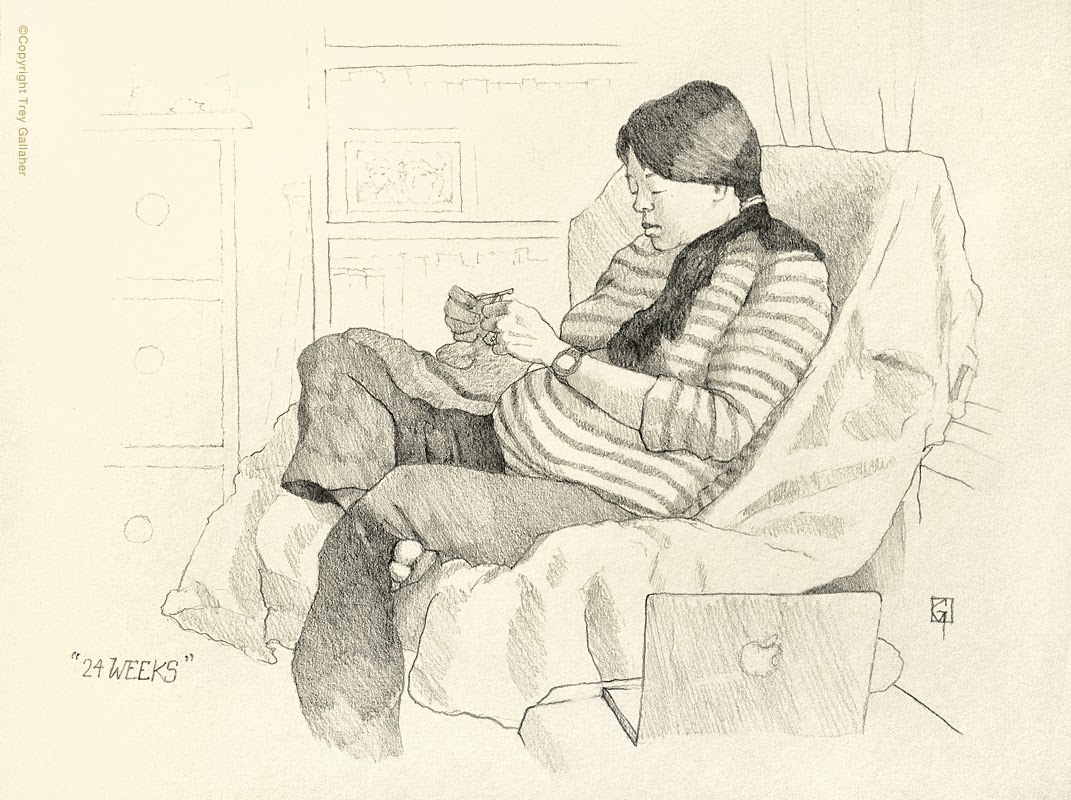
Her belly begins to grow at an alarming rate about twenty-four weeks and it's like an out-of control steam locomotive barreling down the tracks headed straight for you both... hold on!!!! And right about that time you suddenly think this can't get more shocking and amazing watching all this happen before your very eyes, suddenly you feel a little sharp jab, bump or a poke... "WHOA, did you just feel that? OMG!"
(... to be continued)
Artwork: © Copyright Trey Gallaher
"24 Weeks"
graphite on paper
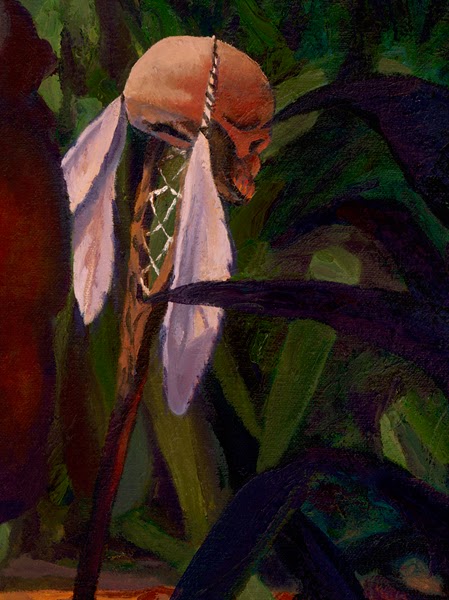
"8 Weeks"
graphite on paper
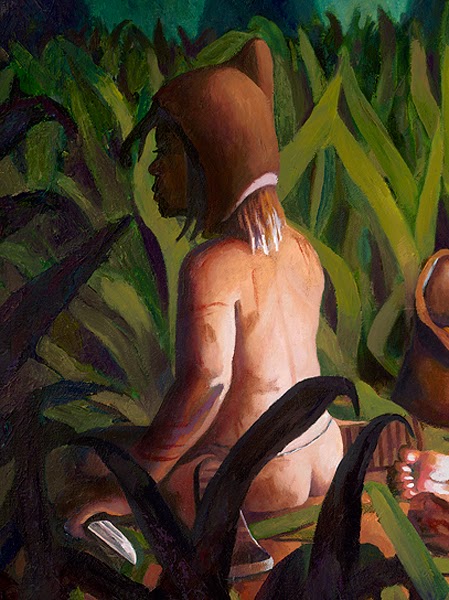
"16 Weeks"
graphite on paper